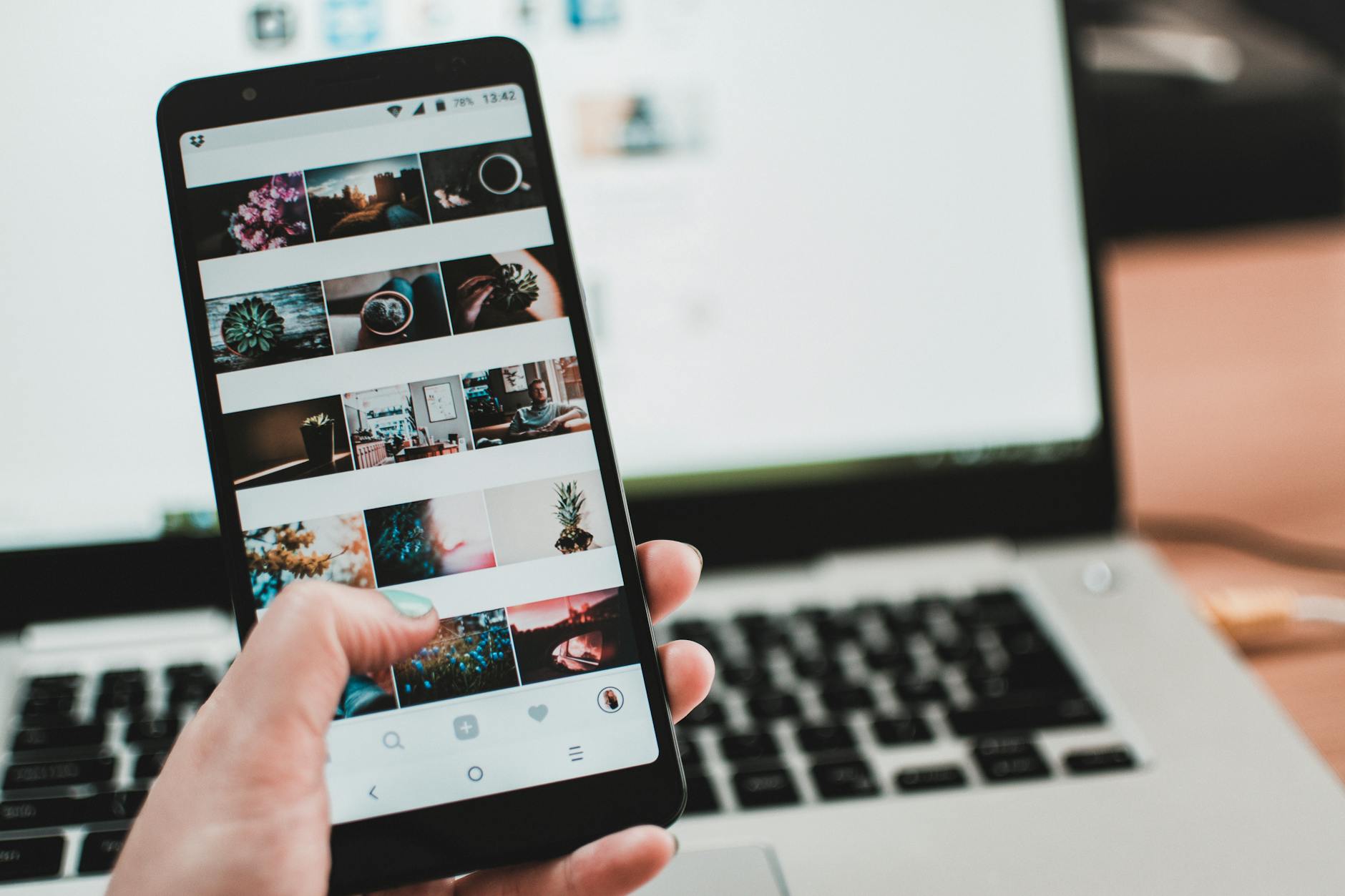
Social media influences consumer behaviour and brand perception in ways that reach well beyond advertising. When someone reads a product review on Instagram, watches an unboxing on YouTube, or sees a complaint go viral on X (formerly Twitter), their view of a brand shifts, often before they've visited that brand's own website. For market researchers, this channel is now a primary source of unsolicited, real-time consumer opinion.
How social media shapes the purchase journey
The traditional purchase funnel assumed that awareness came first, then consideration, then a decision. Social media has compressed and scrambled that sequence. A single viral post can move a consumer from no awareness to a completed purchase in under an hour.
Three specific mechanisms drive this compression. First, social proof: when consumers see peers buying or endorsing a product, the cognitive cost of evaluating it drops sharply. Second, algorithmic recommendation: platforms surface content based on past behaviour, meaning a consumer who has shown interest in a category will keep encountering products from it. Third, frictionless commerce: in-app shopping features on Instagram and TikTok remove the step of navigating to a retailer's site entirely.
For Australian brands, the practical implication is that the discovery stage of the purchase journey now happens largely outside their own digital real estate. A brand's social presence is not supplementary. It is often the first contact point.
Influencer content and trust
Influencer marketing has matured considerably since its early days of blanket celebrity endorsements. Research from the Australian Market and Social Research Society and other bodies consistently finds that consumers place higher trust in recommendations from micro-influencers (those with audiences between 10,000 and 100,000 followers) than in polished brand campaigns. The reason is perceived authenticity: smaller creators tend to have tighter relationships with their audiences, and their endorsements feel less transactional.
This has direct implications for brand perception. A brand associated with a creator whose values align with the audience's self-image receives a halo effect. Conversely, a misjudged partnership can damage perception quickly, particularly when younger cohorts, who are sensitive to inauthenticity, are the target segment. Generational differences in how cohorts form trust and evaluate brands mean that influencer strategy needs to be segmented, not uniform.
Negative sentiment and reputational risk
Social media amplifies negative experiences far faster than positive ones. A 2023 Sprout Social study found that 46% of consumers said they would unfollow a brand on social media after a single poor interaction, and 30% said they would then switch to a competitor. Speed of response matters: brands that acknowledge complaints within an hour consistently score higher on trust metrics than those that wait 24 hours or longer.
What market research has established is that reputational damage from social media crises follows a predictable pattern. Initial sentiment spikes sharply negative, moderates over days if the brand responds credibly, and either recovers or plateaus at a lower baseline depending on whether the response was perceived as genuine. This is measurable. Sentiment tracking tools and social listening platforms can quantify the arc in near real time, giving researchers and brand managers the data needed to decide when to respond, escalate, or let the cycle run.
Understanding how brand perception influences purchasing decisions at the individual level helps explain why social crises translate so directly into lost revenue, not just lost goodwill.
Social listening as a research method
Social listening converts public social media activity into structured consumer insight. Rather than asking people what they think via surveys or focus groups, social listening captures what they say when they aren't being asked. This distinction matters because self-reported behaviour and actual behaviour diverge more than researchers typically expect.
Platforms like Brandwatch, Sprinklr, and Talkwalker aggregate mentions, hashtags, comments, and reviews, then apply natural language processing to categorise sentiment, identify topics, and flag emerging issues. The raw volume of data is enormous. A mid-sized Australian consumer brand might generate tens of thousands of social mentions per week across platforms.
The research challenge is not collecting the data. It's interpreting it. Social media language is ironic, contextual, and culturally specific. Sentiment algorithms trained on North American English corpora can misread Australian slang or irony. Localisation of these tools matters for researchers working in this market. AI tools applied to market research are improving in this area, but human review remains important for category-specific or culturally nuanced analysis.
Platform differences and audience fragmentation
Not all social media platforms exert the same kind of influence, and treating them as interchangeable is a research error. Facebook still reaches the broadest age range in Australia, with penetration highest among consumers over 35. Instagram and TikTok skew younger, with TikTok in particular driving purchase intent in fashion, beauty, and food categories. LinkedIn influences B2B brand perception in ways that don't show up on consumer platforms at all.
YouTube occupies a different position: it's a search engine as much as a social network. Product reviews, tutorials, and unboxing videos on YouTube influence purchase decisions at the consideration stage, often days or weeks after the initial discovery on a faster-moving platform.
Researchers designing social media impact studies need to account for this fragmentation. A brand might have strong positive sentiment on Instagram and significant criticism on Reddit at the same time. Aggregating across platforms without weighting for audience composition produces misleading results.
Measuring social media's impact on brand perception
Connecting social media activity to measurable shifts in brand perception requires a multi-method approach. No single metric captures the full picture.
- Net sentiment score: the ratio of positive to negative mentions over a defined period, tracked as a time series rather than a point-in-time snapshot.
- Share of voice: a brand's proportion of total category mentions on social media, compared against named competitors.
- Engagement rate: likes, shares, comments, and saves relative to reach, which signals whether content is resonating rather than just being seen.
- Branded search volume: spikes in Google searches for a brand name often follow significant social media moments, positive or negative, providing a corroborating signal from outside the social ecosystem.
Triangulating these metrics with brand tracking surveys gives the most reliable picture. Social data tells you what is being said. Survey data tells you what it's doing to underlying brand equity. Neither source alone is sufficient.
What this means for research practice
Social media has not replaced traditional research methods. It has added a continuous, unsolicited data stream that complements them. The brands and researchers who use it well treat social listening as an early warning system and a hypothesis generator, then validate what they find through structured primary research.
Australia's consumer environment in 2026 moves quickly. The AMSRS encourages practitioners to build social media analysis into their standard research toolkit, not as a niche specialism, but as a core competency. Consumer behaviour is increasingly shaped in public, in real time, and understanding that process is now fundamental to understanding what consumers want.